- Latino Owned
- Posts
- A Mexican Designer's Brand Preserving Mexico’s Handwoven Traditions
A Mexican Designer's Brand Preserving Mexico’s Handwoven Traditions
Inside a Fashion Brand Built on Time and Tradition

Jonathan Roque
December 23, 2025

In partnership with

Welcome to Latino Owned, a newsletter for Latino and first-generation entrepreneurs and creators. The goal of this newsletter is to build a community, share inspiring founder stories and expert tips in ecommerce, and connect with Latino and Latina entrepreneurs building the next big brand.
Graziano & Gutiérrez is a Mexican-American workwear and apparel brand collaborating with artisan textile makers in Oaxaca and Chiapas, Mexico.
When co-founder Alejandro Gutiérrez started his brand in 2018, it wasn’t with a five-year plan or venture capital backing. It began as a college thesis with his roommate, Samuel Graziano.
The project asked a simple question: What would it look like to bring traditional handwoven Mexican textiles into contemporary fashion and workwear, without stripping them of meaning?
Seven years later, that question has evolved into a brand that sits at the intersection of heritage, workwear, and cultural preservation, one built slowly, deliberately, and entirely by hand.

Re-discovering Home
Alejandro left Mexico at 14. Like many immigrants, it wasn’t until he was away that he began to understand what he had left behind. “It took me leaving Mexico to start appreciating the culture even more,” Alejandro says.
During a semester back in Mexico (while in college), Alejandro encountered handwoven textiles unlike anything he had seen before. They were beautiful, tactile, and steeped in history, but rarely used for clothing. Instead, they appeared as tablecloths, curtains, linens, and upholstery. Functional, yes, but largely invisible.

“I found these beautiful textiles that a friend of mine was working with. Even today, in 2025, a lot of the textiles we work with aren't used for clothing,” Alejandro shares. “After spending a lot of time in Yucatán, which is where I'm from, I started learning that young folks are not as excited or interested in learning traditional weaving techniques.”
Across regions like Oaxaca, Chiapas, and the Yucatán, Alejandro noticed that most weavers making these textiles were older, often in their 50s, 60s, or 70s. Younger generations were moving to the cities, drawn to Westernized work and lifestyles. The knowledge of harvesting cotton, spinning thread, weaving on looms, and creating natural dyes was quietly aging out.
“There’s a sadness to it,” Alejandro says. “You don’t want all this ancient knowledge to disappear.”
“The main question that we had was how we could try to make these textiles a bit more exciting, for lack of a better word, or something that is more appealing to a younger crowd? I believed there was a way to modernize it and make it a bit more appealing to a younger crowd,” Alejandro says.

Making Tradition Wearable
Rather than treating these textiles as museum artifacts or turning them into conceptual art pieces, Alejandro grounded his work in something familiar: workwear.
Trucker jackets. Barn coats. Utility shirts. Five-pocket pants.
“I didn’t want to make runway pieces,” he explains. “Everything should be rooted in something that is wearable, utilitarian, something that could last a lifetime. Just let the textiles themselves be the highlight of the piece.”
By anchoring the garments in silhouettes tied to labor and durability, the textiles themselves could take center stage. “All of these pieces are rooted in a blue-collar work, workwear history, especially if you're in America and in Mexico,” Alejandro explains.

The families Graziano & Gutiérrez work with spin their own harvest, grow and harvest their own cotton, spin their own thread, weave their own fabric naturally, and work hard to create beautiful textiles. Naturally dyed cottons and handwoven fabrics take weeks, sometimes months, to produce. Materials that already carry stories before a single stitch is sewn.
“These fabrics come from people who work the land. The clothes should reflect that. We discovered a niche in working with these textiles in this way,” Alejandro shares. “It felt like a cognitive dissonance, almost to grab these textiles and start doing art pieces. We wanted everything to be rooted within something that made sense.”
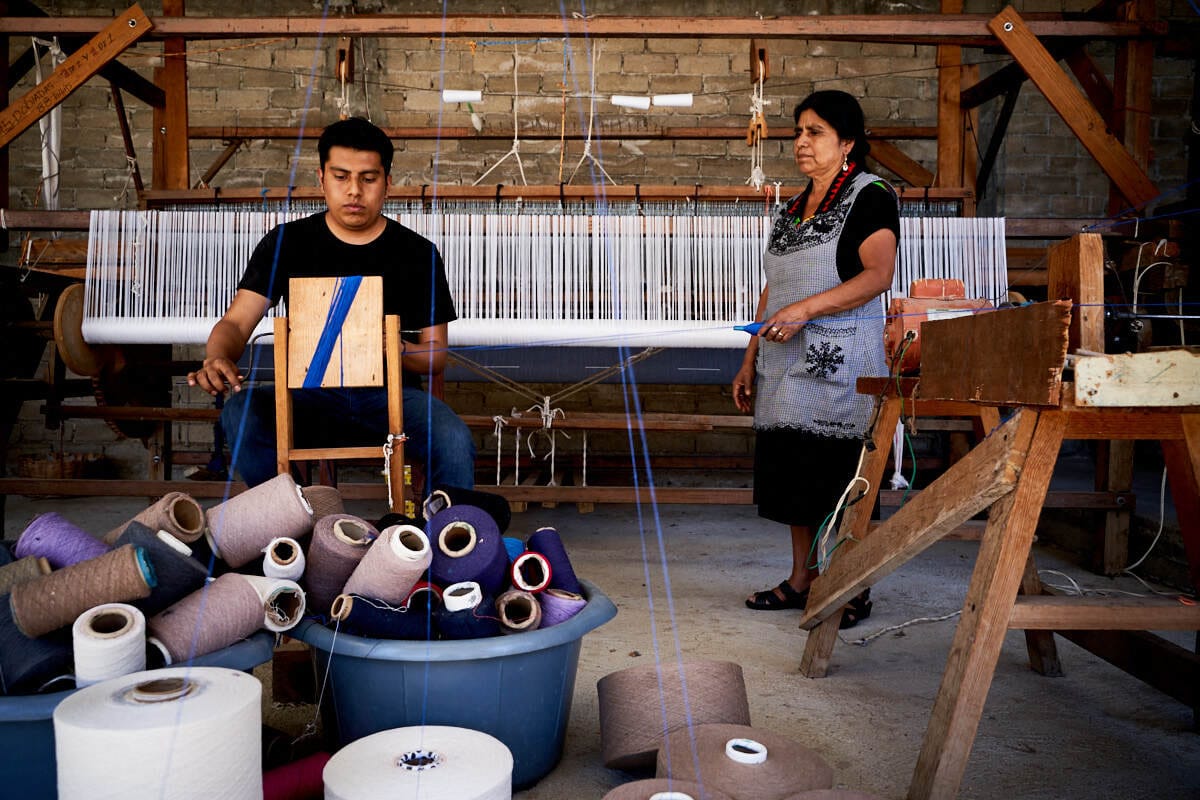
“I believe that with consistency, perseverance, and showcasing all of these textiles around the world, it will show other young designers in Mexico that you can actually work with handwoven textiles from Mexico and make it to Paris, or sell business in Japan.”
Craft, Economics, and Transparency
The romance of craftsmanship often collides with the reality of economics. Alejandro learned this the hard way.
In the brand’s early days, he priced garments instinctively, without fully accounting for costs. One shirt sold for under $200, despite the fabric alone costing nearly $100.
That fabric? Cotton is grown, harvested, spun, woven, and dyed by a single family using cochineal, a dye derived from insects that thrive on cacti. “We’re so detached from what things actually cost,” Alejandro says. “People don’t see the month of labor behind one piece of fabric.”

Today, his shirts sell for $350–$500. The price reflects not only materials and labor, but a commitment to paying artisans what they ask, not what the market pressures them into accepting. “Do you pay someone $20 for a month of work,” he asks, “or do you pay them what their labor is actually worth?”
Each garment includes a label naming the family who made the textile and its origin. Radical transparency isn’t a marketing tactic for Graziano & Gutiérrez, it’s the foundation of trust.
Being a higher-end market, one of the downsides has been thin margins. However, the upside is a high brand retention rate, as once it reaches customers’ hands, they see the product's quality.
“We have plenty of customers who return after they get one piece and see that their item is a high-quality piece. They keep coming back for new pieces because they feel a connection to the brand's story.”

A One-Person Operation (By Design)
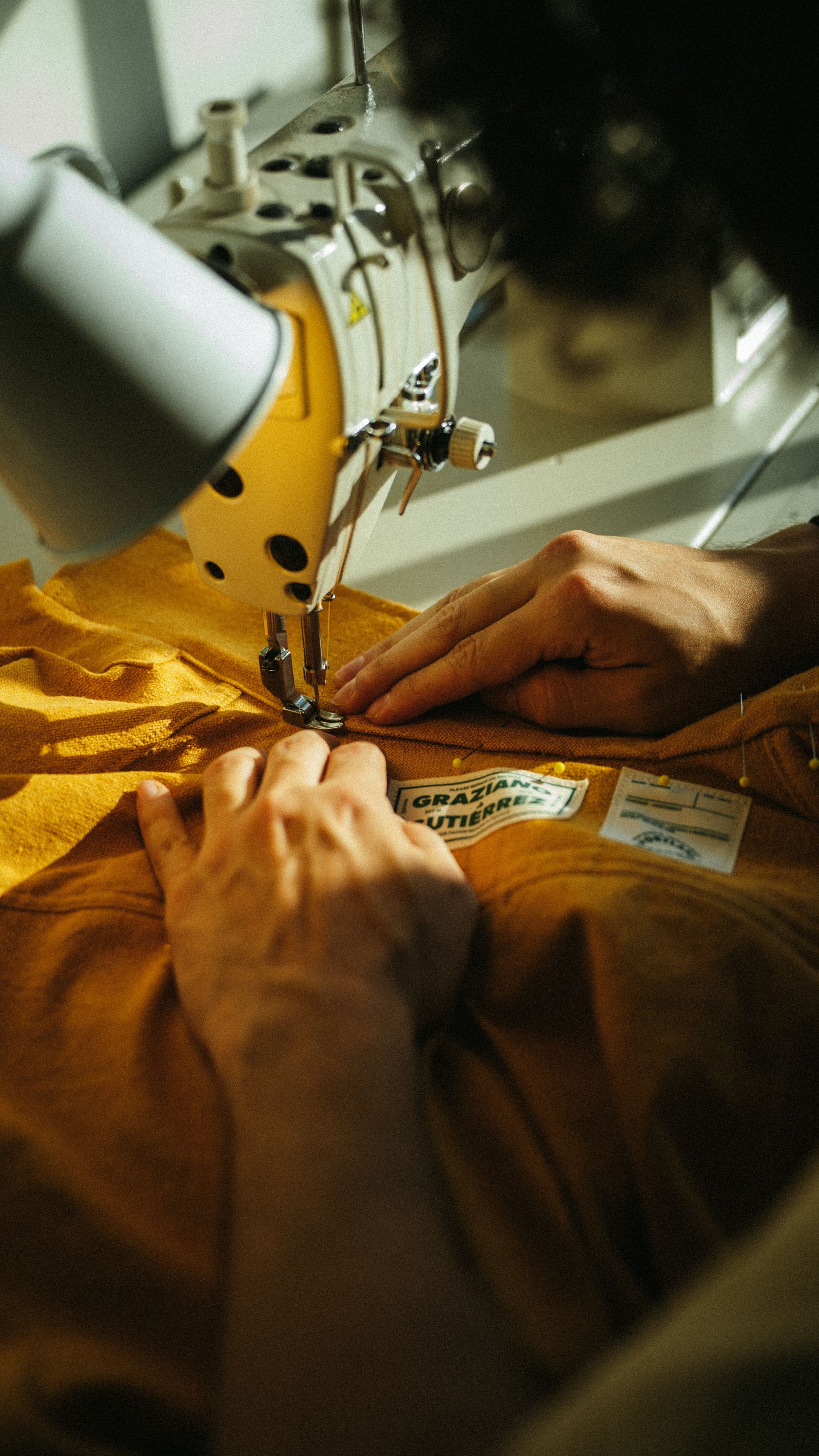
For most of the brand’s existence, Alejandro has done nearly everything himself, including designing, pattern-making, cutting, sewing, hand-stitching buttons, photography, customer emails, and shipping.
That level of involvement is rare in fashion today and adds an added quality to Graziano & Gutiérrez - customization.
“The fact that I'm making everything, I'm able to offer custom changes to people,” Alejandro says. “So people very frequently are like, ‘Hey, can I get this shirt, but can I get this 1 inch shorter?’ Which, you know, they can't get that if they go to Zara or H&M or any of those fast fashion places.”
Culture as Reclamation
For Alejandro, the brand is also personal. It’s a way of navigating life as a Mexican immigrant who exists between cultures in the U.S.
“When I’m here, people hear my accent. When I go back, they know I don’t live there anymore,” he says. “You reach a point where you don’t fully belong in either place.”
“The way that I'm working with the textiles and how I present the brand in the graphic design and everything, is my own way of reclaiming my culture,” Alejandro shares. “After leaving Mexico, I didn't really go back and begin reconnecting with my culture until I was in my early 20s.”
Textiles become a bridge. So do symbols, like the jaguar, a recurring motif drawn from Mayan iconography and ancient manuscripts. The brand doesn’t just reference Mexico, it insists on specificity, honoring regions and traditions often overlooked in favor of Mexico City or northern industrial hubs.
“The south (Mexico) doesn’t get as much love,” he says. “But that’s where so much of this knowledge lives.”
Growth Without Compromise
In 2025, Alejandro stands at a turning point.
For the first time, he’s working with a small factory in Los Angeles to produce non-artisanal pieces such as denim, linen, and basics that can scale responsibly. The handwoven, naturally dyed garments will always remain in-house with Alejandro.
This shift allows him to do what he’s been unable to do for years: step away from the sewing machine long enough to deepen relationships with artisan communities, develop new textiles, and tell their stories more fully. “Having to sew garments 10 hours every day really limits my ability to go to Mexico. I want to be able to work with different communities that do embroidery, different natural dyes, and different textiles to bring more business.”
In January, Alejandro will present a collection in Paris, not a runway show, but a showroom presentation for buyers. The goal isn’t hype. It’s visibility.
“Some of these textiles can sit next to the best in the world,” he says. “They just need to be seen.”
Looking Ahead
Long-term, Alejandro envisions relocating the studio to Mexico, hiring a small team, and expanding into home goods—blankets, rugs, and pillows, developed directly with the families he works with.
But for now, the focus is narrower and more immediate: making the best garments possible, sustaining the people behind the materials, and proving that tradition doesn’t have to be frozen in time to survive.
“I would regret it my entire life if I didn’t give this everything I have,” he says. “Not everyone gets to wake up and do what they love.”
For Alejandro, weaving the past into the present isn’t just a design philosophy, it’s a responsibility that will take Graziano & Gutiérrez worldwide.
Check out Graziano & Gutiérrez and connect with them online and Instagram.
Brand Inspo from South Asian Cafe Elaichi Co. 🫖
Elaichi Co. is a South Asian chai and specialty coffee shop in Berkeley, California. They’re major brand inspo because they have a perfect blend of storytelling social content, mixed with trending videos, behind-the-scenes founder content, and product content.
This is a perfect way of “selling” on social media, while also having a story and intention behind every post.
@officialelaichico Lil surprise update at the end 🤭 #founderstory #browntiktok #chai #smallbusinessowner #southasian
Ad Break: Google Ads for Your Business
Easy setup, easy money

Making money from your content shouldn’t be complicated. With Google AdSense, it isn’t.
Automatic ad placement and optimization ensure the highest-paying, most relevant ads appear on your site. And it literally takes just seconds to set up.
That’s why WikiHow, the world’s most popular how-to site, keeps it simple with Google AdSense: “All you do is drop a little code on your website and Google AdSense immediately starts working.”
The TL;DR? You focus on creating. Google AdSense handles the rest.
Start earning the easy way with AdSense.
Quick Hits to Make Your Business Better: 💪
Apply for the American Express Shop Small Grants Program and get $20,000 to fund the next phase of your business.
Apply for the Faire Small Business Grant and receive $5,000 to kickstart your business.
Last-minute gifts for yourself? Shop our small-business, stocking stuffers, and Holiday gift guide.
Missed other editions? Check out past features: ⤵️
See You in 2026 📬️
This is our final issue of the year! We have an incredible lineup of brands and founder stories to share in January. We hope you have a great Holiday and Christmas and Happy New Year 🍾
Want to be featured? Reply to this email with more info on your brand, and let’s set up a time for an interview.